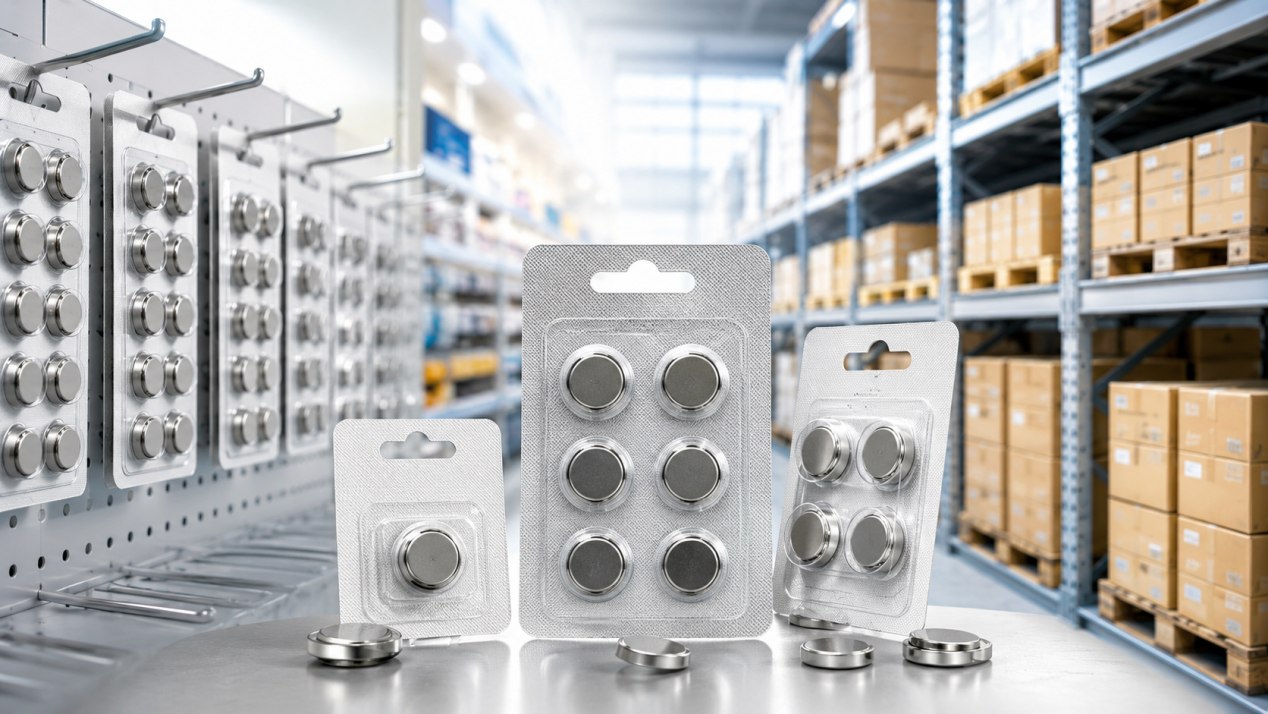
Button cell battery packaging plays a crucial role in ensuring the safety, performance, and usability of miniature power sources used in modern electronics. From hearing aids and watches to remote controls and IoT devices, these compact batteries require specialized packaging that not only protects the product but also enhances its shelf life and retail appeal. The design of button cell battery packaging directly influences safety by preventing leakage or short circuits, while also optimizing storage efficiency through durable, space-saving materials. Moreover, compliance with international standards such as IEC 600865 ensures that manufacturers meet global expectations for child safety, labeling accuracy, and environmental responsibility. These factors collectively define the technical and commercial success of button cell batteries in today’s competitive market.
The primary consideration for packaging button cell batteries is safety. Packaging containers can cause chemical leak, short circuit or other safety incidents if not properly designed to contain batteries. There is also the chance of accidental ingestion by children or pets.
The selection of packaging materials affects contact insulation and chemical deterioration resistance. High barrier polymers, for example, are combined with aluminum laminates to provide moisture barrier and mechanical strength. Also, the method of sealing of the packaging must prevent the leakage of the electrolyte, which could cause corrosion of metal parts or contamination of other nearby components. Anti-static films are also included in the packaging to prevent damage from electrostatic discharge. Such films are particularly important for batteries, which are often stored in large quantities in warehouses or are shipped in large quantities. All layers of the packaging must be chemically stable in order to ensure that the packaging maintains chemical stability throughout the products’ lifetime.
In addition to the integrity of the materials, the consumer protection is also increased by the structural design of the battery. By means of tamper-proof seals or screw-top blisters the single cells are protected against being unintentionally opened by children. Such cases of accidental ingestion of batteries are becoming a global problem. In order to guarantee a child-resistant opening which is effective worldwide, the battery is designed to meet the safety requirements of the IEC standard 600865. In addition to the safe opening, also the clearly visible warnings on the battery packaging, by means of pictograms or by means of conspicuous labels and printing, serve to inform the customer at the point of sale for the potential hazards of the battery.
Packaging design for safe storage must also include thermal protection of the button cells to prevent overheating during storage or transportation. Packaging in inflexible blister structures made of high-temperature-resistant films prevents compression and possible punctures to the battery which could cause short circuits and result in a thermal run-away. Packaging which combines thermal insulation with mechanical robustness is therefore not only safe for use, but also ensures that no fire can occur in any given situation.
Effective storage can extend the life of a product but it can also improve supply chain management all the way from the factory to the retailer.
Control of the packaging environment is critical to maintain the electrochemical stability of the cells over time. In addition to moisture-proof packaging, packaging should also be equipped with a UV-resistant coating of the metallic casings in order to prevent photochemical reactions. Packaging systems are also available with micro-ventilation systems, which keep the pressure inside the packaging at optimal level without the risk of condensation. This type of packaging is very suitable for long-time storage in warehouses.
Space utilization is critical for distributors of button cells with large stock holdings. Even though space-saving packaging solutions exist which are safe, these enable a far greater packing density than conventional solutions. Special modular blister packs for example can be stacked on top of one another and also be read by warehouse management systems easily and automatically. By using such packing solutions, it is possible to keep costs down for the logistics and to meet the fast delivery requirements of retailers with a very high turnover of goods.
Adequate product labeling allows for efficient inventory management and prevents products from becoming obsolete and being discarded. Clearly printed expiration dates on product packaging enable efficient management by warehouse staff using a FIFO (first-in first-out) system. In addition to printed dates, product packaging can also be equipped with a barcode or QR code. This allows linking of the individual batch to the production data of this batch. In the case of quality checks or a product recall, this allows for efficient processing.
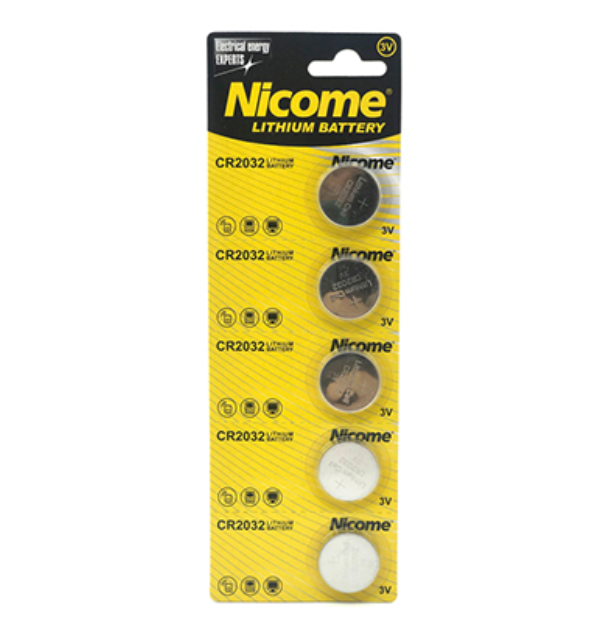
Packaging functions as packaging and also as a marketing tool at the point of sale in retail stores.
In retail environments where many competing brands are displayed next to one another, attractiveness to the consumer is a major factor in their perception of a brand. Showcasing the actual product through transparent blister windows as opposed to static printed images fosters consumer trust in the brand. The use of color coding within the design of a chemistries range, such as for example silver oxide and lithium-based button cells, allows the non-specialist buyer to easily make a purchase after being clearly informed of the differences between the various products, thus simplifying the buying process.
A brand on packaging changes normal packaging into a communication tool to convey reliability and innovative solutions. The prominent logo and required technical data such as voltage or capacity, support brand recognition especially by professional users who need precise data. Also the required compliance information such as recycling symbols underlines the brands commitment to environmental issues and therefore also appeals to the „green oriented“ customer, who requires sustainable products.
Clear ‘best before’ dates on packaging enable the efficient management of stock to maximize inventory turnover whilst minimizing risk of selling out of date stock. Suppliers and retailers benefit from the increased confidence that the products stocked will be fresh and of predictable performance enabling strong relations to be developed through the extended distribution networks of both.
Sustainability has become a main issue in the last years, because manufacturers are looking for environment friendly products which are durable and have the right safety features.
There are also an increasing number of biodegradable plastics that are derived from renewable resources and which can replace conventional plastics for certain applications in order to minimize the environmental impact caused by post-consumer waste. For the protection of sensitive articles in the electrochemical industry also recyclable aluminum foils are used in blister packs instead of conventional PVC blisters, since they are much more recyclable within the actual waste management structures than the latter. The use of these types of packaging is part of a broader company policy that is aimed at implementing a circular economy while maintaining the necessary protection for sensitive articles.
Jiaxing Minimoon Battery Co., Ltd., a leading global supplier of button cells, is a full range battery manufacturer equipped with state-of-the-art production lines and most stringent quality control measures to guarantee consistent quality. By undertaking research and development to fulfill international safety standards, Jiaxing Minimoon Battery Co., Ltd. continuously improves child-safe packaging and eco-friendly packaging solutions for various industries. The company also works with OEM partners to design customized packaging that optimally supports the technical performance of the battery and marketing strategies of partners. As a one-stop supplier, Jiaxing Minimoon Battery Co., Ltd. provides its partners with total support from sampling to mass production.
Button cell battery packaging is more than just how a battery is packaged. It is also a means to safeguard the battery against leakage or thermal damage and to prevent misuse. The packaging also has to enable efficient storage and sales. Packaging can be designed using advanced materials and ergonomic design principles. This results in packaging solutions in modular designs that enable optimal logistics and clear traceability. Sustainability has become a major issue for industry, and suppliers such as Jiaxing Minimoon Battery Co., Ltd. are designing packaging that not only is safe and functional but also meets all relevant regulations while ensuring customer satisfaction worldwide.
High barrier polymers in combination with aluminum laminates are commonly used for packaging purposes, as they are moisture barrier, mechanically stable and chemically stable.
Sealing or insulation that is inadequate will lead to leakage of electrolyte, corrosion or short circuits with consequent effect on battery performance and on user safety.
Yes, IEC 600865 and other international standards also specify for example child-resistant designs, clear labelling and the environmental protection requirements in nearly all markets of the world.


 Carbon Zinc Battery