
The European Union’s Battery Regulation 2027 marks a revolution in how batteries are produced, imported and recycled in Europe. The new regulation aims to make production more sustainable, to improve traceability on the market and to stimulate a more circular economy for batteries. Importers of batteries will have to get a grip on the new rules and obligations as soon as possible to avoid risks and disturbances on the market when the regulation is enforced. This article explains what Importers of batteries need to know about the new rules and what the main obligations are for them. Additionally, the article describes a number of practical steps that Importers can take to prepare for the new legislation.
Before we delve into compliance, it is best to outline the goals of the new legislation.
The EU Battery Regulation 2027 seeks to promote sustainability throughout every stage of a battery’s life cycle—from raw material extraction to end-of-life recycling. It encourages transparency in supply chains through digital battery passports and material traceability systems that track origin and composition data. By 2027, clear carbon footprint limits will apply to different battery types, pushing manufacturers toward greener production technologies.
New trade patterns are emerging as companies adapt their sourcing to ensure that their imports into the EU are compliant with the new sustainability requirements. Non-EU manufacturers will be required to provide a full lifecycle analysis for their products including emissions from production as well as from transportation to the EU. Importers will need to provide test data and certification in order to clear customs in line with new requirements due to come into force. As a result of these additional costs, testing and certification, analysts expect global price structures for lithium-ion batteries as well as for other industrial batteries to adjust.
Importers should be aware of the additional requirements for documentation and transparency which go well beyond the current CE marking or the requirements under the REACH Regulation.
New rules mean that every battery entering the EU market will have a digital passport containing details of the battery’s origin, chemical composition, performance and recyclability. Several of the main logistics providers are now testing out blockchain solutions to manage traceability effectively and minimize administrative errors and errors when processing data. The importer is responsible for checking the accuracy of supplier information when processing customs clearance, and any errors or incorrect information could lead to delays or even be rejected.
Manufacturers must disclose total carbon emissions generated during production and transportation stages. Batteries exceeding emission thresholds may face restricted market access or labeling penalties. To meet these obligations, accurate lifecycle analysis (LCA) becomes essential for documentation. Many importers are now partnering with third-party auditors specializing in carbon accounting to ensure their reports meet EU verification standards.
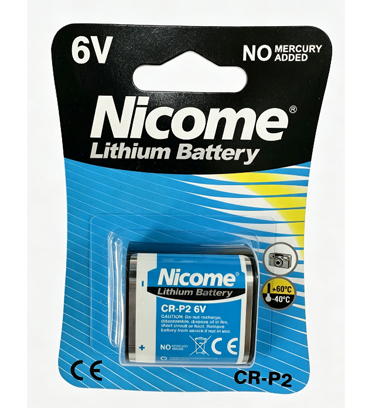
Chinese factories are struggling to get into the European market because of China’s dominant position in the global battery export market. To get into this market Chinese factories have to adjust fast.
Factories should adopt cleaner production technologies such as low-carbon cathode materials or renewable-powered facilities. Implementing ISO 14001 environmental management systems can help meet EU audit expectations while improving internal efficiency. Several large Chinese producers have already begun integrating renewable energy sources into their manufacturing processes as part of long-term sustainability planning.
When evaluating compliance with ethical sourcing requirements suppliers will need to map the origin of raw materials such as cobalt, nickel and lithium to check the ethical mining practices of suppliers. Working with European partners will make it easier to obtain certification under new customs regulations by sharing traceability data via online platforms as opposed to declaring on paper.
Many importers are struggling to balance cost control with regulatory compliance.
By investing in greener logistics networks or in suppliers who have been certified, companies can avoid having to pay for prolonged penalties and for re-certification once legislation is enforced. A recent report from EIT InnoEnergy (2013) detailed the savings of 18% in two years’ operational costs that were made by companies who adopted early compliance strategies. This was down to the companies experiencing fewer delays as a result of fewer inspections and also as a result of more efficient supply chains.
Working with manufacturers that comply with the required regulations enables to keep prices at a stable level even though emission and traceability requirements for the EU are being tightened on a regular basis. Importers and producers joint audits enable to reduce verification costs by up to 25%. Importers and producers can be competitive at the same time while working towards sustainability goals.
Not complying with regulations has the potential to cause more problems than just having to fill out extra paperwork. It could mean losing markets completely.
Non-compliant batteries may be blocked at EU borders or recalled after sale, leading to significant financial losses and reputational harm. The European Commission plans periodic audits starting in 2028 with penalties tied directly to product volume sold illegally within the EU market. For smaller firms, even one failed audit could result in suspension from key distribution channels.
Under extended producer responsibility (EPR) retailers in Europe are prioritizing purchase from verified suppliers. Importers who fail compliance checks risk loosing long term distribution agreements and/or private label agreements that have taken years to develop and may take just as long to get back to that level of business.
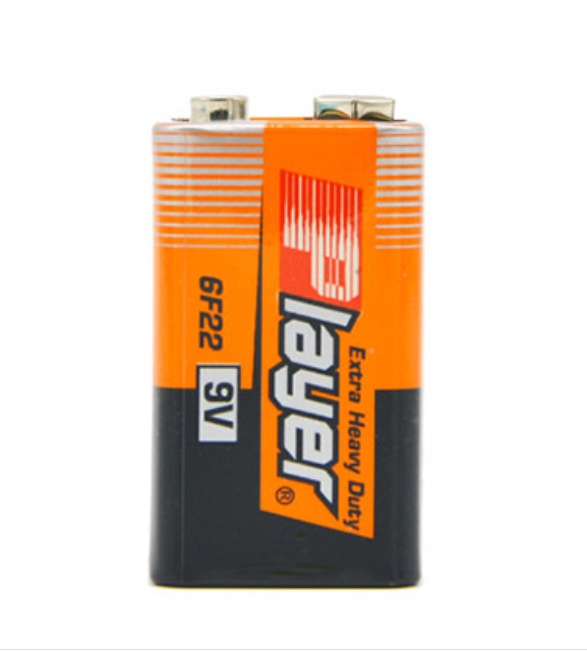
Some companies aren’t waiting until 2027 to start testing their systems for future requirements. They are testing them already today.
Several European distributors have started to include digital traceability in their roll out plans ahead of schedule. First Pilot projects using QR-coded battery passports have been launched already and show first results already: logistics efficiency has even increased by 12% during transport, and a lot of manual work has been taken off documentation work of partners in the transport and recycling chain.
In joint collaboration with a mid-sized German importer a number of certified Chinese solar cell manufacturers have direct relationships with respective producers who already report LCA in line with forthcoming regulations. To avoid excessive documentation-related delays and consequent increase in delivery times the parties have agreed upon reduced documentation enabling corresponding decrease in delivery times of approximately two weeks while at the same time fully maintaining necessary transparency throughout customs clearance formalities.
Many Chinese suppliers are trying to prepare for the changes that will affect them. One supplier, Jiaxing Minimoon Battery Co., Ltd., has already made changes to its production lines to comply with evolving EU sustainability requirements. This supplier has introduced recyclable packaging, a full material traceability system and lifecycle reporting. The supplier can also provide its importers with the necessary documentation to clear customs in the EU and it can offer joint testing with the importer to reveal any potential problem areas before the buyer's foreign warehouse is stocked with arrival of the first shipment. Production can also be delivered to the buyer's chosen location by flexible transport and this does not have to increase the total delivery cost to the buyer if the primary goal of which is to increase efficiency in complying with sustainability requirements.
The EU Battery Regulation 2027 marks a major step in the EU’s mission for greener energy storage on a global scale. Importers will succeed only by being ahead of the game and thus reorganizing their supply chains and verifying the accuracy of their suppliers’ data in a timely fashion. Moreover, they will need to develop close and successful relationships with manufacturers from Asia that in the meantime have already implemented environmentally sound production methods. Importers who anticipate these changes early on will become even more competitive as soon as the regulation is implemented, because they will already be contributing to the realisation of the environmental goals of Europe’s population through their responsible trade policy.
The main rules and requirements will start to be implemented between 2025 and 2027. Enforcement of rules regarding labeling of carbon footprint will become mandatory in the second half of 2027.
It includes portable batteries, industrial batteries, electric vehicle (EV) batteries, lightmeansoftransport (LMT) batteries such as ebikes or scooters, and energy storage system units.
Yes, all economic operators placing batteries on the EU market must comply with the requirements of the battery passport, regardless of their company size. Only in exceptional low-volume cases is an exemption granted by national authorities.
Lifecycle analysis reports, supplier declarations of conformity, carbon footprint data sheets, safety test reports (UN38.3), and registration with relevant EPR-schemes.
Experienced manufacturers understand EU compliance requirements, provide accurate documentation, help avoid customs clearance issues, reduce the risk of labeling errors, and minimize the need for costly re-testing. Their expertise can streamline market entry and ensure smoother operations across EU Member States.


 Carbon Zinc Battery