
For years, thinner consumer electronics pushed batteries deeper inside the product. Adhesive, welded packs, concealed screws, and tightly integrated housings helped reduce thickness, but they also turned a worn battery into a repair job—or a reason to discard the device. In 2026, that design logic is being reconsidered. The EU Batteries Regulation will make Article 11 on portable-battery removability and replaceability applicable from February 18, 2027. For brands planning their next product generation now, battery access has become an engineering and procurement decision rather than an after-sales detail.
The regulatory direction does not mean every product needs an old-fashioned snap-off battery cover. The requirement is more specific. Where Article 11 applies, a portable battery must generally be removable with commercially available tools and without proprietary tools, heat, or solvents. A replacement must also work without compromising product function, performance, or safety.
Because the battery is buried inside decisions made much earlier.
Housing molds, PCB placement, waterproof seals, charging circuits, screw locations, battery terminals, warning labels, and assembly fixtures may all be frozen months before production starts. A company that waits until early 2027 to investigate battery removal could discover that its tooling, enclosure, and certification plan are already built around permanent installation.
The European Commission’s guidance makes the February 2027 application date clear. In practical terms, 2026 is the preparation year for products expected to remain on the European market after that point.
The legal obligation is European, but product architecture rarely respects regional borders so neatly. A brand may use the same flashlight, remote control, grooming device, toy, or handheld accessory across several markets.
Creating one serviceable construction can be easier than maintaining an EU version and a permanently sealed version elsewhere. That does not turn European legislation into global law. It does mean the EU can influence the hardware platform chosen for international product lines.
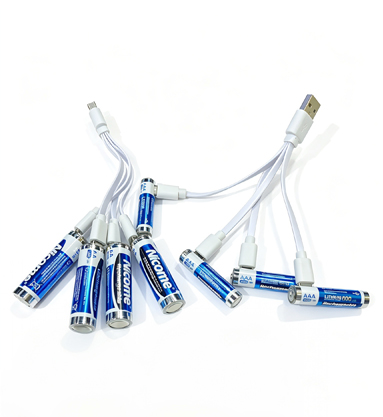
Once the battery must come out cleanly, engineers have to reconsider what sits above it, what holds it in place, and what happens after the enclosure has been opened once or twice.
Several approaches are possible. A battery may sit behind a screwed cover, inside a removable module, in a conventional holder, or beneath a panel released with ordinary tools. Rechargeable packs can use keyed connectors and mechanical retention rather than depending entirely on adhesive.
The important point is the removal route. If accessing a covered portable battery requires heating the enclosure or dissolving adhesive, the design can conflict with the EU definition of readily removable.
That makes accessibility part of mechanical architecture. A battery should not be trapped beneath unrelated boards, soldered wires, or fragile decorative pieces that must be destroyed during replacement.
It can.
A sealed enclosure may rely on continuous adhesive because it creates a large, uninterrupted joint. A removable cover needs a repeatable seal: perhaps a gasket, controlled screw compression, clips, or another engineered interface.
The second opening is where weak designs show themselves. The enclosure may pass an initial splash test, then leak after the gasket has been removed and reinstalled. Validation therefore needs to include battery replacement followed by reassembly, not just testing untouched production samples.
Replaceability changes the comparison between standardized cells and embedded rechargeable packs. Neither approach wins automatically.
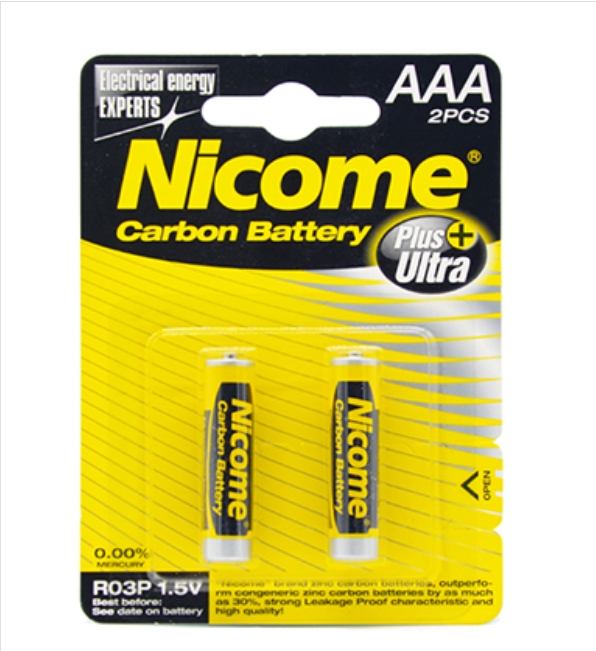
AA, AAA, 9V, coin, button, and other established formats already have a familiar replacement model. They can work well in remotes, flashlights, toys, clocks, handheld instruments, and other products where ultra-thin packaging is not the overriding requirement.
Their appeal is straightforward: the battery format is known, replacement is easy, and the device does not depend on a proprietary pack remaining available.
There are trade-offs. Cell holders take space. Contacts must maintain pressure after years of use. Button-cell compartments may require additional measures against accidental access. Leakage, discharge profile, storage life, and device current still need to match the application.
Rechargeable packs are not disappearing. Their design brief changes.
The pack needs defined dimensions, polarity, connector geometry, protection circuitry, retention, labeling, and a clear replacement procedure. A compatible replacement should restore the product without reducing its intended function or safety.
Article 11 also requires covered batteries to remain available as spare parts for at least five years after the last unit of the equipment model is placed on the market. It also prohibits software from being used to prevent replacement with another compatible battery.
A purchasing file that lists only voltage, nominal capacity, and unit price is becoming inadequate. The battery has to work on the assembly line, inside the product, during replacement, and potentially years after the original production run.
For standard primary batteries, define chemistry, dimensions, terminal configuration, expected discharge load, storage conditions, date coding, packaging, and relevant tolerances. Then verify the actual battery compartment with production-intent cells.
For rechargeable packs, add the connector, wire sequence, protection design, charge limits, pull direction, retention method, and pack enclosure. A replacement pack that physically fits but changes charging behavior is not genuinely interchangeable.
This is also where the smartphone and tablet sector offers a useful signal. EU ecodesign requirements applying since June 20, 2025 already combine battery durability with disassembly, repair, spare-parts, and software-access requirements.
Do the job the way the user will.
Open the enclosure with the specified tools. Remove the cell or pack. Check whether connectors are easy to reach, whether cables are pulled, whether screws can be lost, and whether the battery can accidentally be installed backward.
Then repeat it. A gasket that tears after several openings or a connector latch that weakens after repeated handling is a service-life problem, even if the original product passed factory inspection.
After reassembly, check electrical operation, charging where relevant, enclosure fit, and any claimed environmental protection.
Replaceable-battery regulations extend the supplier relationship beyond the first production order. A battery may still be needed years after the device itself has stopped being manufactured.
The supplier file should identify chemistry, dimensions, terminal design, tolerances, date coding, storage conditions, packaging, and production-lot controls. Rechargeable batteries need additional control over connectors and protection circuitry.
Long-term availability deserves an early conversation. If a product is designed around an unusual pack, the brand needs to know how future replacement supply will be managed.
A technically ordinary cell in a widely used format may sometimes create less lifecycle risk than a highly customized solution that becomes difficult to source three years later.
A battery can retain the same model name while something important changes: can dimensions, terminal finish, separator, connector, protection board, wire length, or manufacturing source.
Those details can alter fit or electrical behavior.
For repeat orders, approved drawings and measurable tolerances are more reliable than descriptions such as “same as previous.” Retained samples help with comparison, but a written change-notification process is what prevents an unreviewed substitution from reaching an established electronics product.
Jiaxing Minimoon Battery Co., Ltd. manufactures battery products including carbon-zinc, alkaline, lithium, button-cell, and rechargeable ranges for consumer and OEM applications. Product development can begin with device voltage, operating current, compartment dimensions, runtime target, storage requirements, replacement method, packaging, and destination market. Buyers evaluating standardized removable cells or rechargeable options should approve production-intent samples, terminal geometry, dimensional limits, labeling, packaging, and incoming-inspection criteria before volume ordering. For products expected to remain serviceable for several years, supply continuity and formal notification before construction or material changes should also be addressed early rather than left until a replacement battery is needed.
Replaceable batteries are returning because regulators are forcing product teams to consider what happens after the original cell wears out. In 2026, the immediate challenge is not simply meeting a 2027 deadline. It is redesigning access, seals, connectors, spare-part planning, and battery specifications before tooling becomes difficult to change. Consumer electronics can still be compact and rechargeable. The difference is that battery replacement now has to be treated as part of the product lifecycle from the beginning.
Article 11 of the EU Batteries Regulation applies from February 18, 2027. Product teams are preparing earlier because enclosure design, tooling, replacement instructions, and battery sourcing must be settled beforehand.
No. Commercially available tools can generally be used. The regulation focuses on avoiding removal methods that depend on proprietary tools, heat, or solvents, subject to specific exceptions.
They may suit products where easy replacement, broad availability, and straightforward servicing matter. Device size, runtime, current demand, leakage control, contacts, and energy density still determine whether they fit.
Yes. Rechargeable packs remain practical when replacement, connectors, charging behavior, protection circuitry, retention, sealing, and future spare-part availability are considered as part of the original product design.
Ask about chemistry, dimensions, terminals, discharge behavior, labeling, batch control, storage, long-term supply, replacement availability, and change notification, plus connector and protection specifications for rechargeable packs.


 Carbon Zinc Battery