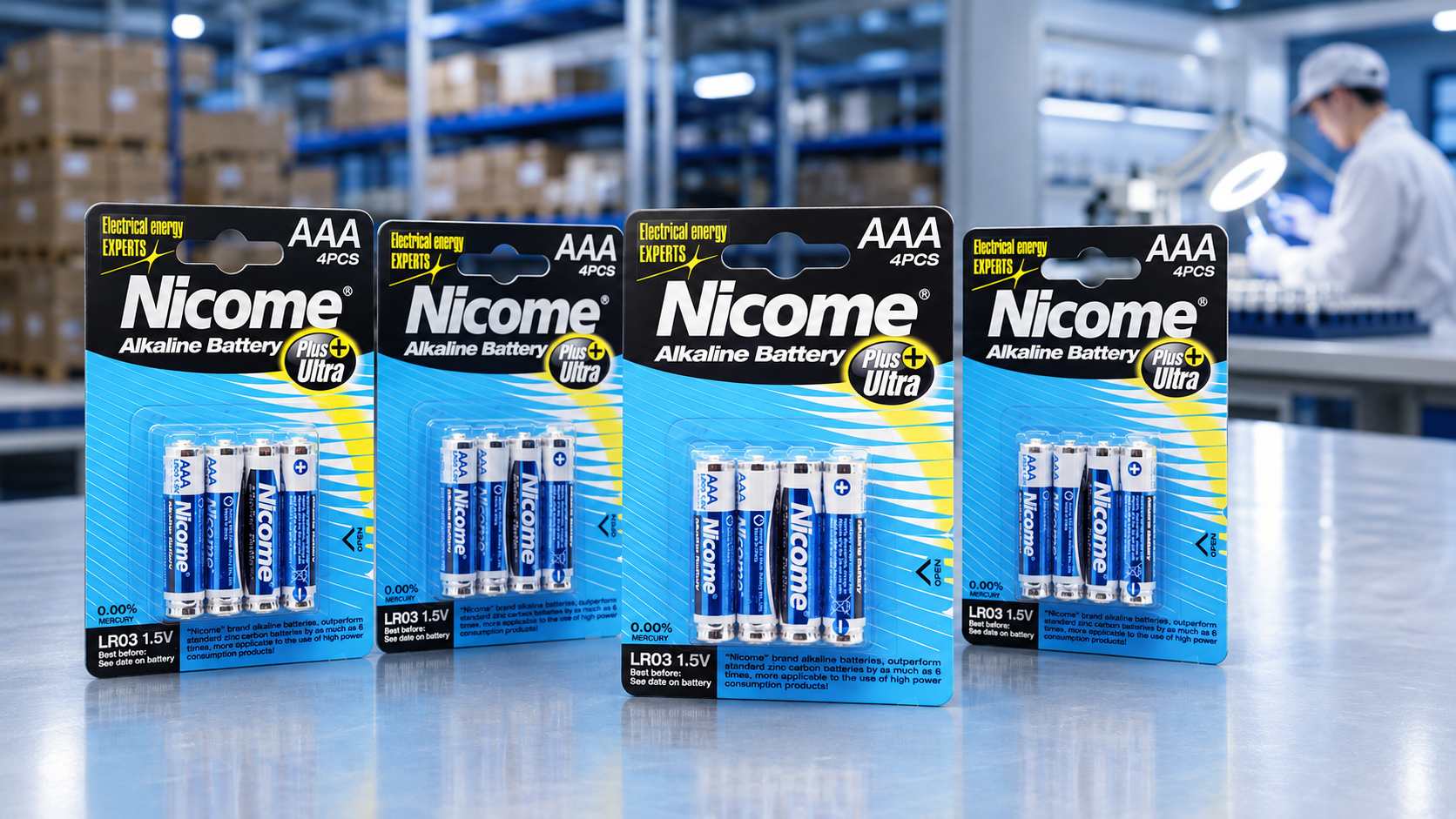
Buying alkaline batteries for wholesale distribution is rarely as simple as comparing two quotations. Once order quantities increase, a few issues become far more important: whether different batches perform consistently, whether packaging matches the destination market, whether the factory can reproduce an approved sample, and whether problems can be traced when something goes wrong. For an importer, distributor, retailer, or private-label brand, choosing an alkaline battery supplier is therefore a supply-chain decision rather than a one-time product purchase. The following checks help purchasing teams compare manufacturers on the factors that matter after the first shipment has left the factory.
A useful supplier comparison starts before quotations arrive. If three factories receive three slightly different requirements, their prices tell the buyer very little.
The enquiry needs to establish what is actually being purchased.
Start with battery size and intended use. AA, AAA, C, D, and 9V batteries may all belong to the alkaline family, but their applications and purchasing requirements are not identical. Buyers evaluating several formats can first review the manufacturer's available alkaline battery range and narrow the discussion to the sizes relevant to their market.
Application matters as well. Batteries intended for remote controls, toys, clocks, flashlights, or other household electronics may face different discharge conditions. Telling the manufacturer where the battery will be used gives the technical team more context than sending a model number alone.
Packaging should be specified at the same stage. Questions worth settling include the number of cells per retail pack, inner-box arrangement, export-carton requirements, branding needs, and destination-market labeling.
A clear initial enquiry normally covers:
l battery size and chemistry;
l target application;
l expected order volume;
l retail packing format;
l private-label or OEM requirements;
l destination market;
l inspection or performance requirements.
Once these points are fixed, quotations become much easier to compare on the same basis.
A sample can answer one question: does this battery appear suitable for the intended application?
It cannot fully answer a second, more important wholesale question: can the factory reproduce that result through repeated production?
This is where batch consistency enters the discussion.
Samples are useful during supplier screening, but large orders involve far more variables. Raw materials, production settings, assembly accuracy, sealing, storage, and final inspection can all affect the finished battery.
Rather than focusing only on whether several samples work, ask how the supplier controls variation during production.
Useful topics include incoming-material checks, electrical testing, appearance inspection, leakage prevention, batch identification, and finished-goods inspection.
The objective is not to collect as many test names as possible. Buyers need to understand whether those checks are part of routine production or performed only when requested.
Repeatability is particularly important for distributors building a long-term battery program.
Suppose the first shipment passes inspection and sells without problems. Six months later, another order is placed with the same specification. The purchasing team needs reasonable confidence that the second production run will follow the same approved requirements.
That depends on specification control, production records, packaging approval, and communication between customer and factory.
When a buyer needs to evaluate an individual size in more detail, a relevant AA alkaline battery product page can be used as a reference point during the technical discussion. The blog itself does not need to reproduce the product specification; the product page is the better place for that information.
Price matters. But a unit-price comparison works only when the products and commercial terms behind the numbers are genuinely comparable.
One supplier may quote a different retail pack. Another may base its offer on a different carton quantity or branding arrangement. A third may include work that another quotation excludes.
Without normalizing those differences, the cheapest figure can be misleading.
Place each supplier's offer beside the same checklist:
battery size, packaging, quantity, branding requirement, inspection arrangement, lead time, trade terms, and any agreed performance conditions.
This is also the point where buyers sourcing several battery categories can review a supplier's broader battery product portfolio. Consolidating categories with one manufacturer can simplify sourcing in some projects, although the decision still depends on price, quality, order volume, and supply requirements.
A slightly lower purchase price can disappear quickly if a shipment requires additional sorting, creates retailer complaints, or has to be replaced.
That does not mean expensive batteries are automatically better. It means purchase cost and procurement risk should be evaluated together.
Importers dealing with repeat wholesale orders are usually better served by a predictable specification and stable manufacturing process than by an unusually low quotation that cannot be maintained on future shipments.
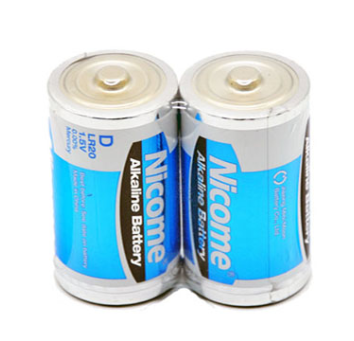
The same logic applies when evaluating larger-format cells. Buyers can move from a general sourcing discussion to the relevant alkaline battery product page when they need model-specific information instead of turning the article into a product catalogue.
Private-label orders introduce questions that standard wholesale purchasing may not have.
The factory is producing a product that will appear under someone else's brand. An error in artwork, packing, labeling, or model identification therefore becomes the buyer's market-facing problem as well.
Artwork and technical specifications are sometimes reviewed by different teams. That creates room for mistakes.
A better process links the approved battery model, packaging layout, pack quantity, carton mark, and purchase order under the same project.
If artwork changes, the latest approved version should be easy to identify. If the battery specification changes, packaging should be checked again before production.
“Same as sample” sounds straightforward, but it leaves many details open.
Buyers can reduce ambiguity by documenting the agreed model, important performance requirements, packaging format, appearance expectations, and inspection arrangement before the order is released.
This is particularly useful when a brand expects to place repeat orders. Staff change, packaging gets updated, and distributors may request different market versions. A written approval trail makes those changes easier to control.
For buyers that are still assessing the manufacturer itself, the Minimoon company information provides additional background that can be reviewed separately from individual product pages.
A supplier evaluation does not have to begin with a lengthy audit. A focused technical and commercial conversation can reveal a great deal.
Ask how the factory manages production batches. Ask which inspection steps are performed during normal production. Ask how an approved specification is carried into repeat orders. For private-label projects, ask how artwork approval is controlled.
Then move beyond the product itself.
What happens when the buyer needs a packaging change? How are order details confirmed before production? Who handles technical questions? What happens if a quality concern is discovered before shipment?
Specific questions tend to elicit more useful answers than asking whether a factory has “good quality.”
Communication deserves due diligence since international wholesale orders usually involve multiple parties, requiring multiple steps such as enquiry, specification confirmation, sample approval, artwork, production, inspection, packing, shipment, revising for repeat orders, and so on
A technically capable factory can still become difficult to work with if information is not recorded or passed accurately between teams.
For additional company and product information, buyers can use the Minimoon Battery website as the starting point and then move to the relevant category or product page as their sourcing requirements become more specific.
Wholesale battery sourcing often involves more than one size, one shipment, or one packaging format. Jiaxing Minimoon Battery Co., Ltd. manufactures battery products for international customers and supports distributors, importers, and brands with wholesale and OEM requirements. Its website covers alkaline batteries as well as other battery categories, allowing purchasing teams to review the relevant product pages separately when more detailed specifications are required. For a new sourcing project, buyers can begin with the required battery type, application, quantity, packaging format, destination market, and branding needs, then discuss whether the manufacturing and supply arrangement fits the planned distribution program.
Choosing an alkaline battery supplier for bulk orders is not only about finding a proper sample and pricing. A buyer should set forth some exact requirements in order to obtain a stable supply of a standardized product. A number of factors that must be taken into consideration include specification, control over the production process, continuous production run, packaging, and post-sale support. Comparing manufacturers based on the same purchasing criteria allows for a meaningful analysis of the quotations. In case of importers or buyers of private-label batteries, the most beneficial supplier is the one that offers the consistent product at the increased rate.
Send the battery size, target application, estimated quantity, packaging requirements, destination market, branding needs, and any inspection requirements. Giving every supplier the same specification makes quotations much easier to compare.
No. Samples are useful for initial evaluation, but wholesale purchasing also depends on production consistency. Review how the manufacturer controls materials, production, inspection, packaging, and repeat-order specifications.
Confirm the battery specification, packaging design, pack quantity, labeling, carton information, artwork version, inspection arrangement, and order quantity before mass production begins.
Packaging changes material use, carton quantity, freight efficiency, warehouse handling, and retail presentation. Two quotations with different pack formats are therefore not directly comparable even when the battery size is identical.
Look at production controls, batch identification, quality inspection, specification management, communication, packaging accuracy, and the supplier's process for carrying approved requirements into future production runs.


 Carbon Zinc Battery