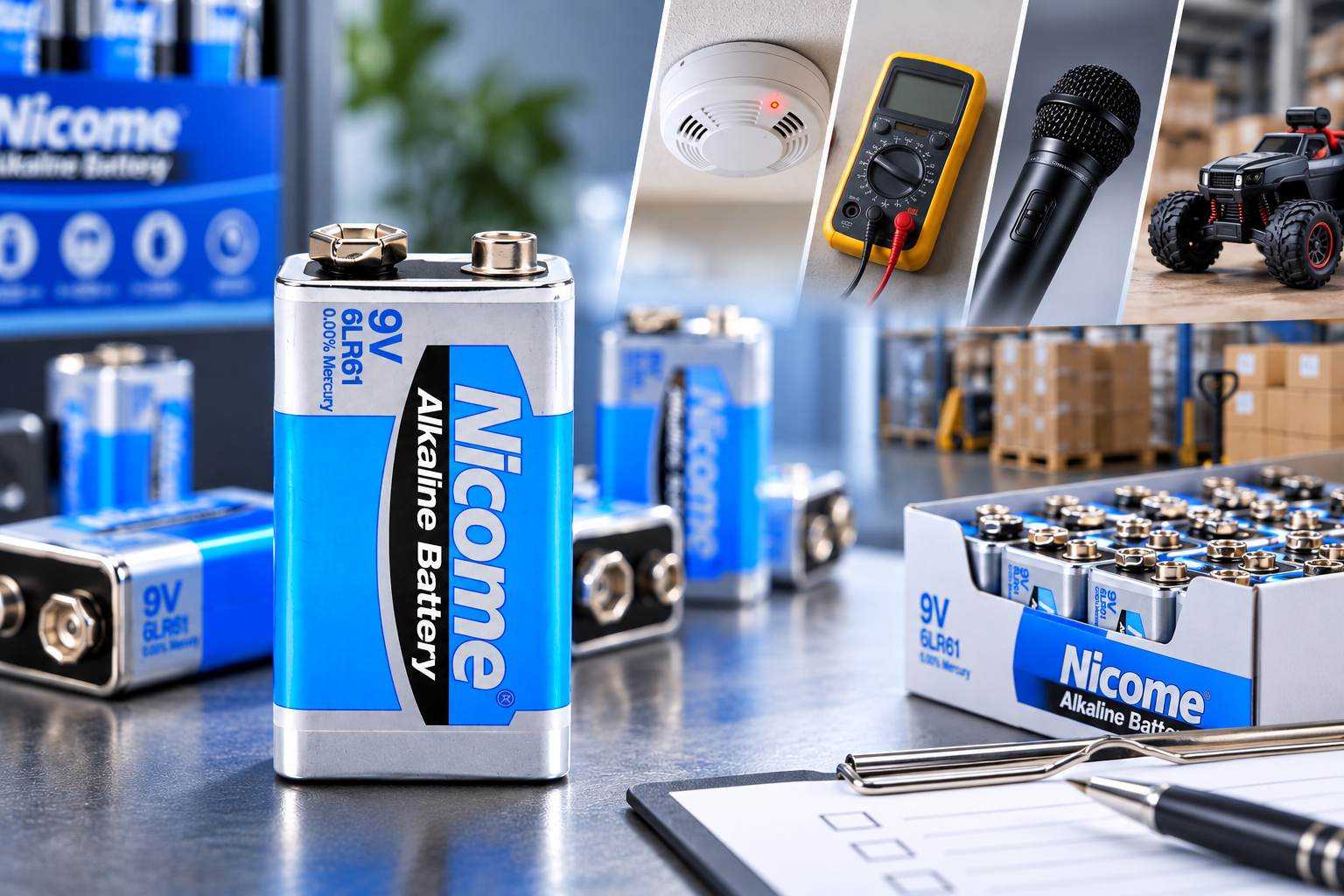
Evaluating a 9V alkaline battery for wholesale or retail supply is less about finding the longest runtime claim and more about understanding whether the product, packaging, and commercial terms fit the intended market. A distributor selling replacement batteries through general retail has different priorities from an OEM buyer supplying a defined device, even when both purchase the same 9V format. For Purchasing Managers, Technical Buyers, and private-label teams, the practical job is to connect application demand, discharge data, packaging format, carton structure, and repeat-order control before price becomes the deciding factor. Doing that early makes supplier quotations easier to compare and reduces changes after samples or artwork have already been approved.
A quotation becomes useful only when suppliers are pricing the same commercial requirement. “9V alkaline battery” identifies the basic product family, but it leaves open several details that can materially change price and suitability.
A replacement battery sold through supermarkets, hardware stores, or online retail does not need to be evaluated in exactly the same way as a battery supplied with a specific electronic device. Retail programs tend to place more weight on pack presentation, broad application compatibility, and reorder flexibility, while OEM programs can place greater weight on a defined electrical load or device-level test.
That distinction should appear in the RFQ. If the buyer knows the application, it should be stated. If the battery will be sold as a general replacement product, that should also be clear so the technical review is not built around a use case that does not represent the market.
A buyer reviewing several primary formats can first check an alkaline battery category to understand how the 9V format sits within a wider sourcing program.
The commercial requirement does not need to become a long specification document, but several points should be fixed before offers are compared:
RFQ Item | Why It Matters |
Battery chemistry and format | Confirms that equivalent products are being quoted |
Intended application or channel | Gives context for performance and packaging |
Pack configuration | Defines the actual selling unit |
Order volume | Affects production and commercial terms |
Performance reference | Provides a common basis for technical review |
Carton information | Supports logistics and landed-cost planning |
Branding requirement | Separates standard supply from private-label work |
Once those fields are consistent, a price comparison becomes much more meaningful.
Battery specifications often look precise enough to compare immediately, yet test conditions can change what the numbers actually mean. A technical buyer should read the method behind the result before treating runtime or discharge duration as a ranking.
Load, test schedule, end voltage, and recorded duration belong together. A duration figure taken out of that context says much less than it appears to say.
For example, a lighter test load can produce a longer runtime than a more demanding one. A lower cut-off voltage can also extend the recorded duration because the test continues farther into the discharge curve. Two suppliers can therefore publish different-looking numbers without the products having been tested on the same basis.
The practical comparison is not simply “Battery A lasts longer than Battery B.” It is whether both results were produced under equivalent conditions that are useful for the buyer’s application.
For general retail distribution, a defined standard discharge reference may provide enough information for supplier qualification. A retailer cannot predict every device in which the battery will eventually be installed, so designing a custom test around one application can create false precision.
OEM supply is different. If the battery will be used in a known product, representative samples can be checked in that device alongside the supplier’s discharge data. That gives the technical team two useful references: one controlled laboratory-style benchmark and one application-specific result.
The goal is to test only what helps the purchasing decision rather than requesting additional data simply because more testing appears more rigorous.
Packaging can change the commercial value of the same battery without changing the cell itself. It influences how the product is displayed, identified, handled in the warehouse, and replenished by downstream customers.
A retail program needs a defined selling configuration before artwork begins. Whether the product uses a single-piece pack or another arrangement affects card dimensions, printed information, barcode placement, carton quantities, and the way the SKU is managed internally.
Late packaging changes often create more work than buyers expect. A revised pack may require new artwork dimensions, new carton calculations, and another pricing review even though the battery specification has not changed.
That is why packaging should be approved as part of the commercial specification rather than treated as a design task that happens after sourcing.
A visually attractive pack is not automatically the best operational choice. Retailers may need strong shelf presentation, while wholesalers supplying professional or industrial customers may care more about handling efficiency and carton density.
The buyer should therefore consider what happens after the export carton is opened. Will packs go directly onto hooks or shelves? Will cartons be split among regional dealers? Will the product be repacked locally?
Answering those questions makes it easier to choose a pack format that supports the actual route to market rather than one selected only because it looks familiar.
A 9V battery program can become commercially inefficient even when the product itself is suitable. Carton configuration, stock turnover, and reorder timing influence how much capital remains tied up and how easily inventory can be distributed.
Sales forecasts are often expressed in pieces, but warehouse and freight operations work with cartons and pallets. Converting the forecast into cartons before the order is released can reveal whether the proposed quantity fits normal handling and downstream allocation.
Carton dimensions and gross weight also matter when several battery formats are consolidated in the same shipment. Buyers sourcing more than one category can review the wider battery product range while planning mixed orders and warehouse space.
Higher quantities may improve the quoted unit cost, but slow-moving stock can erase that advantage. The first commercial order should reflect realistic channel demand, expected reorder intervals, and supplier lead time rather than the largest available price tier.
Once actual sales data is available, order volume can be adjusted with greater confidence. That is usually a better basis for procurement than assuming a larger first shipment will automatically lower total cost.
The first order normally receives the most attention. Samples are reviewed, artwork is checked, and specifications are discussed carefully. Problems often appear later, when repeat purchasing becomes routine and the original approval details are no longer easy to retrieve.
A practical record should connect the approved chemistry and format, selling pack, artwork version, carton configuration, performance reference, and any inspection requirements used during qualification.
This gives purchasing, quality, and logistics teams the same baseline when a reorder is placed months later. If packaging changes, the revision can be recorded without losing the history of the earlier version.
The point is not to create excessive paperwork. It is to prevent “same as last time” from becoming the only instruction controlling a commercial battery program.
A new pack design, revised printed information, different order quantity, or changed technical requirement may affect price, inspection, or sample approval. Treating these updates as controlled changes makes repeat orders more predictable.
For private-label programs, this is particularly useful because packaging can evolve while the underlying battery specification remains unchanged. The buyer can then decide whether a new sample is required or whether the existing product approval still covers the revised order.
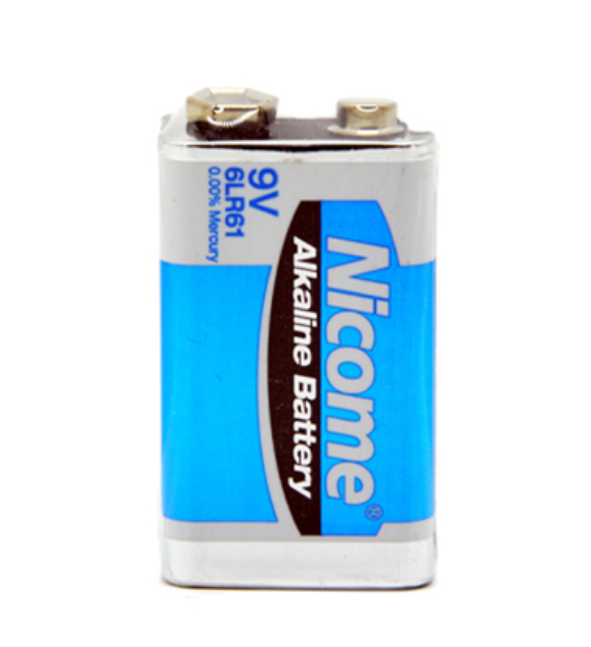
Jiaxing Minimoon Battery Co., Ltd. manufactures mercury-free zinc-manganese batteries for international wholesale, retail, and OEM programs. For buyers evaluating the 9V format, the company provides a 6LR61 9V alkaline battery with published discharge and packing information, while its broader alkaline battery range covers additional standard formats for mixed assortments. Reviewing the battery specification, pack structure, test reference, carton information, and branding requirement together gives purchasing teams a clearer basis for comparing quotations and preparing repeat orders.
Evaluating a 9V alkaline battery for wholesale or retail supply requires more than comparing nominal format and unit price. Buyers should align the intended sales channel, discharge reference, packaging configuration, carton data, and repeat-order controls before choosing between suppliers. The strongest purchasing decision is the one that connects technical suitability with how the product will actually be packed, stored, sold, and reordered. Once those conditions are fixed, quotations become easier to compare and later production changes are less likely to create unexpected cost or quality problems.
The RFQ should identify the battery chemistry and format, intended application or sales channel, pack configuration, expected quantity, performance reference, branding requirements, carton information, and any inspection requirements needed for supplier comparison.
No. Runtime should be read together with the discharge load, schedule, and end voltage. Results produced under different conditions are not directly comparable, even when both suppliers quote a single duration figure.
Yes. Retail-pack materials, artwork, inner-box structure, carton quantity, packing labor, and logistics can all affect the quotation. Buyers should standardize the packaging requirement before comparing supplier prices.
Start with realistic sales demand, carton configuration, expected stock turnover, and supplier lead time. A larger quantity may reduce unit price, but that saving can disappear if additional inventory moves slowly.
Keep the approved battery format, selling pack, artwork version, performance reference, carton configuration, and inspection requirements linked to one SKU record. Any change should be reviewed before the next production run.


 Carbon Zinc Battery