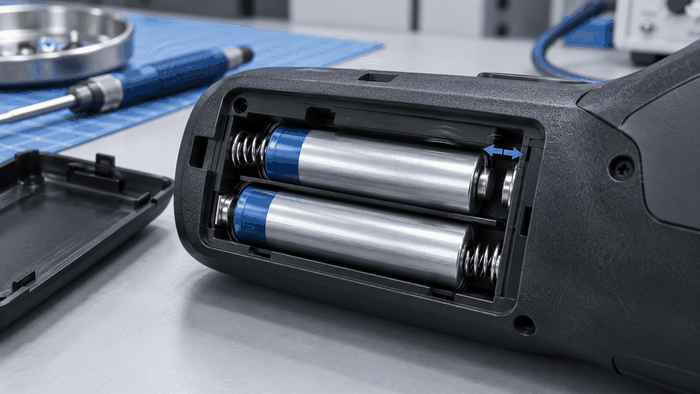
A bench voltage reading can miss the reset. Once still, the cell often touches again. During the troublesome turn, its negative end may exhaust the spring's remaining travel. A fresh pair can hide that gap, so retain the original cells when checking spring contact, positive landing, and cover restraint.
Low capacity tends to appear as current rises. A light that blinks during one turn but resumes immediately suggests movement instead. If door pressure stops it, the cover is adding end force or limiting roll.
Turn the light slowly through the position where it blinks. A lengthwise cutout favors spring compression or end clearance; a rotational cutout favors rolling away from the landing point. Repeat once with light door pressure.
If the unit also fails untouched, check loaded voltage, the switch, wiring, and solder joints. A quick shake may reproduce the complaint, but only a defined direction shows whether samples fail at the same position.
“AA” gives a dimensional envelope; it does not make every cell, spring, or compartment identical. The holder has to accommodate variation on both sides of the interface.
Published AA product data give 49.5 to 50.5 mm total height and 13.5 to 14.5 mm diameter. The positive button must also reach the device contact. If a shoulder or label meets nearby plastic first, a compliant cell may still sit short of a recessed contact.
At the negative end, Battery-contact guidance describes coil springs as a way to take up length variation. Success still depends on available travel, alignment, closed-cover compression, and cover support.
With excess side space, the cylinder can pivot until the positive button touches only the edge of its contact. At the other extreme, a label seam may catch on a rib and hold the cell short of the spring. Compare an alkaline battery range with rib positions and closed-cover width; the AA designation cannot show those interferences.
What happens | Likely area of interest | A useful comparison
Cutout during lengthwise movement | End gap, spring movement, or terminal reach | Observe continuity while the cell is moved along its axis
Cutout during sideways movement | Side gap, a distorted holder, or weak door support | Close the production cover and check whether the cell shifts
One lot works while another does not | Cell-envelope interaction with the compartment | Put measured dimensions and terminal shapes beside the approved drawings
Different cell types fail in one product | The common part is now the device, not the cell type | If those cells run in a second device, trace the first holder, switch, wiring, and solder joints
The complaint appears only after storage | Contact surfaces or spring position changed while the product sat assembled | Look for film or corrosion and compare spring projection with an unused unit of the same construction
None of these observations condemns one part by itself. A spring may work with a mid-length cell yet lose compression with a shorter acceptable cell; the failure belongs to that pairing.
Two crossed trials separate the possibilities. Cells from the complaint unit go into another device of the same design, while a cell set that has run normally goes into the complaint unit. Repeating the pair with several samples shows whether the same side keeps failing.
Opening the cover destroys the installed position. A photograph preserves polarity, orientation, label position, and obvious skew. Lot identity, operating mode, and cutout direction give context to a short video and say more than “batteries loose.”
Where test points can be reached without disturbing the compartment, continuity or input voltage can be watched during the original motion. A dip at the instant of the blink confirms an opening path but does not yet locate it among the terminal, wire, switch, connector, and PCB joint. A probe that presses the cell toward its contact invalidates the comparison. Any measurement around exposed conductors must follow the device maker's safe laboratory procedure.
If the product fails with several sound cell sets, attention moves toward its holder or assembly. If one cell group causes trouble in several holders, compare its dimensions, terminals, and labels with the approved drawing. One failing pairing suggests an interface near both tolerance limits.
Inspection can then ask specific questions: Is the spring bent or off center? Does the positive contact land on the button or its edge? Has residue reduced the contact area? A door pad or latch carries no current yet may control the sideways movement.
For a sideways-only cutout, a temporary insulating spacer can stop lateral travel without touching the terminals. If the blink disappears, inspect side restraint and then remove the spacer. Foil, loose metal, and improvised springs can bridge insulated gaps and are not holder repairs.
Brief impacts, carrying rotation, and continuous tool vibration move cells differently. Match the trial to the product, keeping orientation, load, movement, and production cover unchanged between samples.
Item | Detail associated with the result
Battery | Chemistry, designation, model, lot, and drawing revision
Cell shape | Length, diameter, terminal dimensions, and any label interference
Holder | Drawing, contact material, usable spring movement, compression, polarity, and wiring
Compartment | Ribs, cover, pads, latches, and installed orientation
Movement | Fixture, direction, operating mode, severity, duration, and sequence
Pass condition | No reset, the chosen continuity limit, no cell displacement, and no damage
Samples | How many cells and products were used, their lots and conditioning, and which runs failed
After the combination passes, receiving checks can focus on dimensions and visible features that affect it. A changed label, terminal, spring, housing, door pad, or assembly method may call for the relevant part of the trial again.
The battery product catalog identifies the AA/LR6 drawing. Results from AAA, C, D, 9V, or coin cells cannot predict its length, diameter, terminal, or restraint fit.
The supplier identifies the cell drawing and revision; the device maker identifies the holder, cover, and operating motion. Together they describe the arrangement that worked.
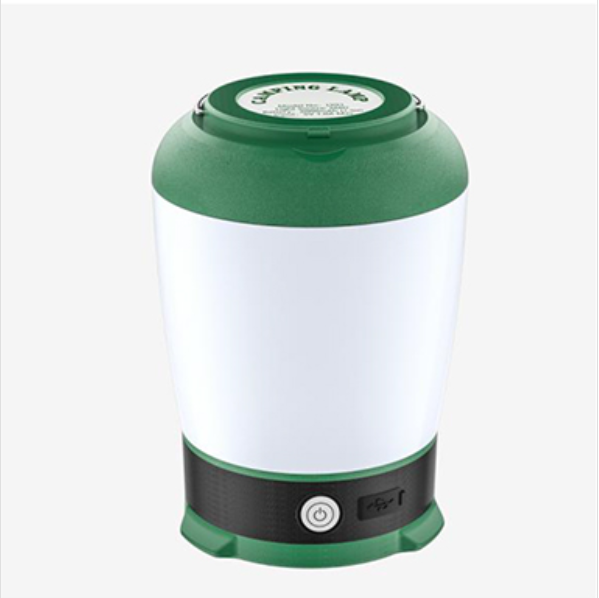
Try measured cells from representative lots in production-intent devices. Products carried or mounted on moving equipment need that motion in the trial. The flashlight category shows where power delivery and retention meet, without predicting a customer's assembly.
Keep the original cells and cover with a returned unit. Before the cover is lifted, one photograph can capture a cell leaning against a rib, a spring compressed off center, or a cover pad sitting beside rather than over the cell. Those positions may vanish during disassembly.
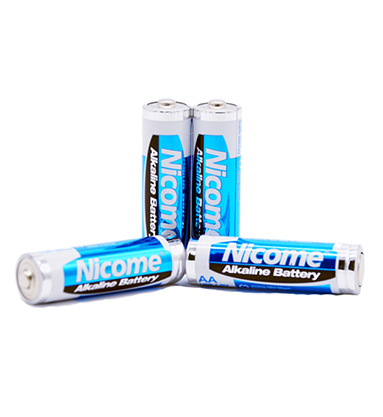
Jiaxing Mini Moon Battery Co., Ltd. lists alkaline, carbon-zinc, lithium, button-cell, rechargeable, and flashlight categories. The CIVIC LR6 4PCS/SHRINK page provides an AA/LR6 reference. Buyers can submit device, packaging, and sample requirements with holder dimensions and spring position. Contact still depends on terminal landing, cover restraint, and device motion.
Movement-related cutouts are an interface question. Direction suggests where to look; a controlled swap shows whether the complaint follows the cells or product. Dimensions and contact observations explain the pairing. Purchasing can then use the arrangement that passed instead of assuming every AA cell and holder interact identically.
It can. A shifted cell may touch again before the meter is connected. Voltage or continuity watched during movement can catch the brief interruption.
Diameter controls side clearance; length and terminal height affect end compression. Even a compliant cell moves if the spring is already compressed, the fixed contact is bent, the compartment is wide, or the cover pad misses it. Compare cell and holder measurements together.
Foil places an uncontrolled conductor beside the terminals. A safe correction changes the holder, contact, or retaining feature while preserving insulation and checking the complete device.
Return the original cells and cover with the device. Include installed photographs, lot identities, operating mode, triggering movement, video or measurements, and known-good swap results.


 Carbon Zinc Battery