The first pack out of a carton may look exactly as expected. That isn't enough. With a 9V battery, the useful evidence appears when you turn the pack over, look into the corners of the inner box, and compare the arrangement before and after the carton has been moved. The two snaps sit close together. If a conductive object can reach both, neat artwork will not prevent a short circuit.
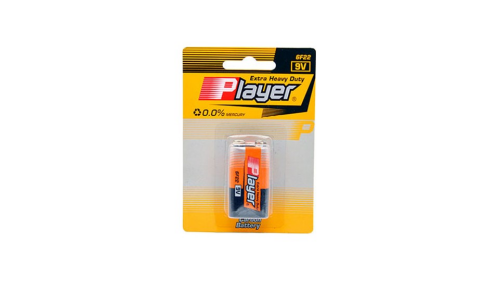
So the approval job has two parts that shouldn't be confused. One is commercial: did the supplier pack the product that was ordered? The other is physical: does that pack keep the terminal pair away from metal and from neighboring batteries? Both have to be answered with the finished sample in hand.
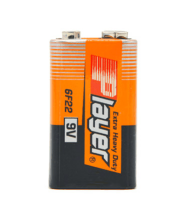
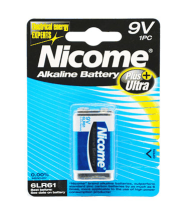
A buyer who writes only “9V battery” leaves an avoidable gap. That familiar rectangular body can contain different chemistries. MiniMoon identifies its PLAYER 6F22 carbon-zinc battery in a one-piece blister card as carbon zinc. A separate listing identifies the 6LR61 alkaline battery in a one-piece blister card as alkaline.
Before inspecting protection, read the order and the sample together. Model, chemistry, nominal voltage, pack construction, and sales-unit quantity should agree. A mismatch here changes the question: it is no longer a packaging defect on the approved product, but a product or presentation that was never approved.
Transport wording needs the same discipline. The IATA document reviewed for this piece deals with lithium metal, lithium-ion, and sodium-ion batteries with organic electrolyte. It specifically excludes other battery types from that document's scope. That makes chemistry the starting point, not the shape of the case. The shipment route, mode, and carrier conditions still need their own review before anyone decides which instructions belong in the file.
NFPA describes the 9V issue without much ceremony: “The positive and negative posts are close together.” Its guidance explains that one metal object across the two posts may produce a short circuit. It recommends retaining original packaging until use and insulating the posts of a loose battery with suitable tape.
Pick up the proposed retail pack. Does the cell stay where the card or film placed it? A small opening is important if it creates a route to the terminals; an opening elsewhere may be a different defect.
The same reasoning applies to loose metal. Note what the object is and whether normal movement could carry it across both snaps. A staple fixed outside the terminal area and a free clip inside the same compartment are not equivalent findings.
Next, repeat the observation with several retail units loaded in the intended direction. Watch the packs by the sidewalls and corners. Those positions may allow a cell to rotate when the center units remain supported. If anything shifts, leave it in place long enough to photograph the route to the snap end.
A PDF proof can settle copy and color. It cannot show whether a blister lifts, film creeps away from the top, or a battery turns inside an inner box. The approval sample therefore needs the production materials, actual seal, and planned unit arrangement.
This isn't a minor distinction in the catalog. MiniMoon offers a PLAYER 6F22 carbon-zinc battery in one-piece shrink packaging as well as the blister-card item noted above. If the purchase file records only the model, two people may picture different finished packs and both believe they are following the order.
At inspection, keep the findings separate. First settle identity. Then judge terminal isolation, followed by retention and visible pack condition. This order makes diagnosis easier. A wrong model is not “fixed” by a strong blister, while a correct label does not excuse a torn seal.
Take a photograph before closing the representative carton. It should show the layer pattern, pack direction, dividers, and any unused space. Terminal ends shouldn't become the load-bearing point simply because the drawing looked tidy.
Move the closed carton in a way that represents routine handling, then reopen it without first straightening the contents. Has a card bent? Did a divider climb out of position? Is one battery turned, or has film torn where packs meet?
This check has a deliberately limited purpose. It can expose movement or weak pack-out during ordinary handling; it isn't a formal transport test and doesn't decide regulatory compliance. That boundary should stay in the article and in the inspection record.
Samples also need an address. “Top layer” is better than nothing, but carton number, layer, and position are more useful. Draw from more than one location, then retain an approved unit. A later change to the film, card, seal, divider, carton, quantity pattern, or terminal direction calls for another finished sample.
Six months later, the original reviewer may not be available. The record should still make sense: approved pack or photographs, matching artwork revision, carton layout, inspection notes, defect images, and the disposition of any correction. It also helps to name the supplier of the retail pack, inner box, and outer carton, since quotations may divide that work differently.
Jiaxing Minimoon Battery Co., Ltd. describes its work as developing, producing, and marketing mercury-free zinc-manganese batteries. Its battery product catalog can lead a buyer to the relevant model. The finished pack for the specific order remains the item to approve.
Good terminal protection is visible in the packed order, not inferred from the words “9V” or “blister.” Confirm the battery, trace any conductive path, see what moves inside the carton, and retain the accepted sample. That gives the next shipment a clear reference.
No. Inspect the real blister for cell movement, open edges, seal condition, and access to both snaps.
No. Identify the chemistry first, then review the shipment mode, route, and carrier conditions against the applicable requirements.
Request another finished sample when the pack type, card, film, seal, divider, carton, quantity pattern, or terminal direction changes.


 Carbon Zinc Battery